

What Sleep Aid Is Best for Stress-Related Sleeplessness?
A science-backed guide to understanding how evening tension disrupts rest, how targeted ingredients calm your mind and body, and how to choose the right solution.
Key Takeaways
- Stress-related sleeplessness involves both neuroendocrine hyperarousal and circadian disruption, requiring a dual approach that calms mental tension while signaling physiological bedtime.
- Sensoril Ashwagandha is a clinically validated adaptogen that reduces serum cortisol levels, modulates the HPA axis, and helps calm a racing mind before bed.
- Melatonin works naturally with your body to support sleep* by reinforcing your internal circadian rhythm, reducing sleep onset latency by an average of 7.06 minutes in meta-analyses.
- The ZzzQuil portfolio offers high-quality options tailored to diverse consumer needs, spanning 100% Drug Free dietary supplements like PURE Zzzs De-Stress & Sleep to medicated over-the-counter sleep-aids.
The Biological Link Between Stress and Sleeplessness
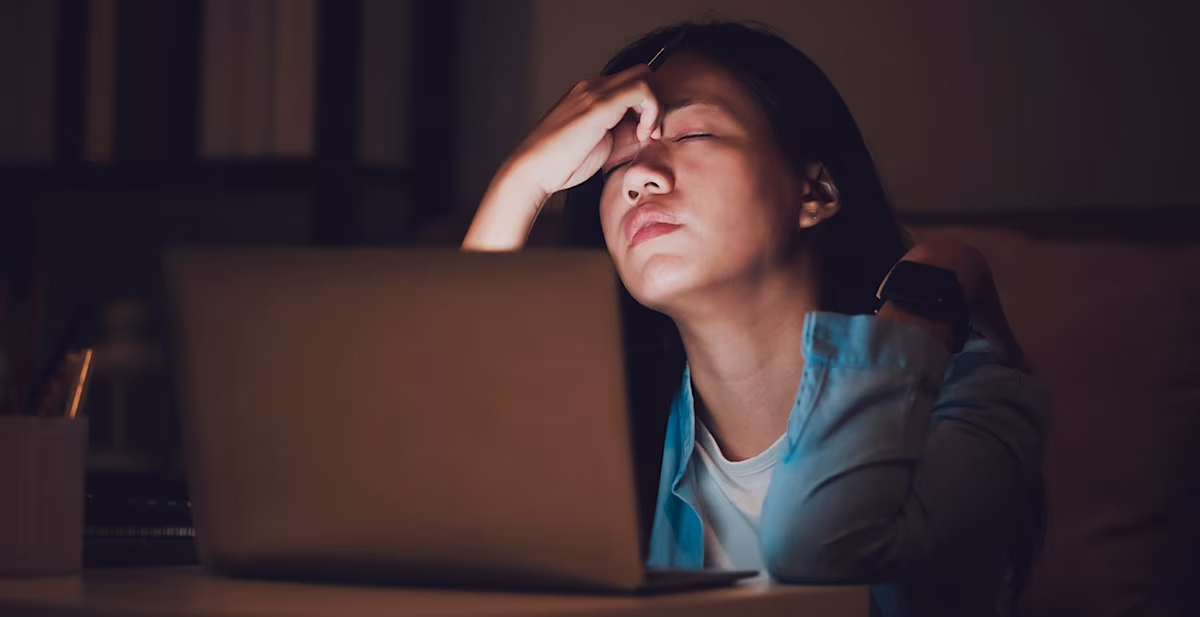
When stress keeps you awake at night, the most effective approach combines ingredients that calm your body's stress response with ingredients that regulate your sleep-wake cycle. While traditional sleep aids focus solely on inducing drowsiness, stress-related sleeplessness requires a dual strategy: calming a racing mind and signaling to your internal biological clock that it is time to rest. Adaptogenic herbs such as ashwagandha help your body manage occasional stress and support healthy cortisol balance, while melatonin helps you fall asleep naturally by reinforcing your circadian rhythm. For many adults dealing with evening tension, combining an adaptogen with melatonin provides the most comprehensive nighttime relief.
Occasional sleeplessness linked to daily pressure is widespread across the adult population. According to surveillance published by the Centers for Disease Control and Prevention (CDC), approximately 14.5 percent of adults in the United States experience trouble falling asleep on most days or every day[1]. Public health resources from the CDC note that chronic stress and disrupted sleep form a compounding cycle that undermines daytime focus, emotional stamina, and immune resilience[2]. Furthermore, guidance from the National Institute of Mental Health (NIMH) at the National Institutes of Health (NIH) emphasizes that ongoing stress keeps the hypothalamic-pituitary-adrenal axis in a state of persistent activation[3]. Under baseline conditions, cortisol follows a predictable circadian slope: it peaks sharply shortly after morning waking and declines gradually toward an evening trough, allowing the brain to transition toward sleep. When evening worry, high-pressure deadlines, or active mental rumination persist, cortisol remains elevated. This physiological hyperarousal blocks evening tranquility, delays sleep onset, and fragments nighttime rest.
National health studies from the American Psychological Association (APA) underscore that more than two-thirds of adults report that elevated stress directly deteriorates their sleep quality, while inadequate sleep substantially magnifies next-day stress perception[4]. When addressing this evening challenge, consumers have multiple valid pathways. For acute, short-term relief, over-the-counter sleep-aids formulated with active ingredients like diphenhydramine HCl provide dependable, medicated support for occasional sleeplessness. For individuals seeking non-prescription, drug-free alternatives, dietary supplements combining neuroendocrine adaptogens and circadian hormones provide a multi-targeted approach to restore balance to both mind and body.
Ashwagandha: Calming a Racing Mind and Supporting the Stress Response
Ashwagandha, known botanically as Withania somnifera, is a prized botanical with a multi-millennial history in Ayurvedic wellness traditions. In modern nutritional medicine, ashwagandha is classified as an adaptogen, an elite group of plant-derived compounds that support the body's natural capacity to adapt to physical, environmental, and emotional stressors without disturbing normal physiological function. The primary bioactive phytochemicals within ashwagandha are withanolides, naturally occurring steroidal lactones concentrated in the roots and leaves that interact with neurochemical signaling networks to modulate the physiological stress response.
Extensive clinical research substantiates the role of ashwagandha in moderating neuroendocrine tension and nighttime restlessness. In a randomized, double-blind, placebo-controlled clinical trial conducted by Auddy et al. (2008), researchers evaluated the clinical effects of a standardized ashwagandha extract (Sensoril) at 125 mg daily[5]. The investigation established that participants receiving 125 mg of standardized ashwagandha experienced statistically significant reductions in subjective stress scores, marked drops in serum cortisol levels, and significant decreases in sleeplessness subscores on the Modified Hamilton Anxiety Scale compared with placebo[5]. Further clinical trials, including an evaluation by Cooley et al. (2009), verified ashwagandha's capacity to calm a racing mind, ease bodily tension, and foster a healthy physiological response to stress[6].
Institutional guidance from the National Center for Complementary and Integrative Health (NCCIH) at the NIH highlights that ashwagandha has undergone rigorous contemporary study evaluating its biological actions on stress perception and cortisol regulation[7]. In clinical overviews from the Cleveland Clinic, medical specialists explain that by helping modulate the hypothalamic-pituitary-adrenal axis, adaptogenic ashwagandha dampens the excessive fight-or-flight signaling that fuels bedtime racing thoughts, enabling the nervous system to shift smoothly into evening restoration[8].
Melatonin: Resetting the Clock When Evening Tension Delays Sleep
While adaptogens like ashwagandha work on calming the neuroendocrine stress response, your sleep-wake schedule also requires distinct chronological cues. Even when an individual successfully unplugs mentally, prolonged evening hyperarousal often postpones the pineal gland's natural secretion of melatonin. Melatonin is a hormone produced naturally by your body in response to darkness, synthesized from serotonin in the pineal gland. It acts directly upon MT1 and MT2 receptors within the brain's suprachiasmatic nucleus to signal that nighttime has arrived, coordinating core body temperature drops and biological sleep readiness. When evening stress causes you to toss and turn past your target bedtime, supplemental melatonin provides the necessary chronobiotic signal to align your internal circadian clock.
Extensive scientific literature confirms the efficacy of melatonin for initiating sleep onset. In a landmark meta-analysis published in PLoS ONE evaluating 19 randomized controlled trials with 1,683 participants, Ferracioli-Oda et al. (2013) demonstrated that melatonin significantly decreased sleep onset latency by an average of 7.06 minutes while increasing total sleep duration by 8.25 minutes compared with placebo[9]. Furthermore, seminal clinical trials by Dollins et al. (1994) and Zhdanova et al. (1995) verified that physiological melatonin supplementation reliably promotes sleep onset without causing next-day psychomotor performance impairment when allowing an adequate sleep window of six to eight hours[10, 11].
Public health reviews from the National Center for Complementary and Integrative Health (NCCIH) at the NIH affirm that melatonin is non-habit forming and serves as a well-tolerated tool for realigning disrupted sleep schedules[12]. Educational materials from the National Heart, Lung, and Blood Institute (NHLBI) further note that maintaining circadian synchrony is vital for psychological resilience, emotional regulation, and daytime metabolic health[13]. In clinical recommendations, the Mayo Clinic underscores that supplemental melatonin taken 30 to 60 minutes before bed helps counter schedule drift caused by evening screen exposure or late-night cognitive stimulation[14].
Complementary Botanicals: Herbal Aromatics and Evening Rituals
Beyond adaptogenic herbs and chronobiotic hormones, botanical extracts have a long history in bedtime preparation. Herbs such as chamomile, lavender, valerian root, and lemon balm have been cherished for generations as part of evening winding-down traditions. In modern dietary supplements, these botanicals serve as a complementary blend designed to enhance your sensory sleep environment. Rather than delivering standalone pharmacological effects, botanical extracts offer a familiar, comforting presence that helps set the stage for nighttime calm. Authoritative overviews from the Sleep Foundation and clinical resources from the Mayo Clinic emphasize that multi-sensory bedtime rituals, incorporating soothing herbal aromas and predictable pre-bed habits, signal the central nervous system that daytime obligations have concluded[14, 15].
Comparing Ingredients for Stress-Related Sleep Support
Ingredient | Primary Mechanism | Best Suited For | Scientific & Institutional Evidence | Timing Before Bed |
|---|---|---|---|---|
Sensoril Ashwagandha | Modulates HPA axis and supports healthy cortisol response | Racing mind, daytime tension carrying into evening, mental stress | Statistically significant reduction in cortisol and sleeplessness scores in DBPRCT (Auddy et al. 2008); supported by NIH NCCIH and Cleveland Clinic | 30 to 60 minutes |
Melatonin | Acts on MT1/MT2 receptors to regulate circadian sleep-wake timing | Difficulty falling asleep, disrupted bedtime schedule, delayed sleep onset | Meta-analysis of 19 RCTs showing 7.06 min reduction in sleep latency (Ferracioli-Oda et al. 2013); verified by NIH and Mayo Clinic | 30 to 60 minutes |
Complementary Botanicals (Chamomile & Lavender) | Sensory comfort and traditional evening relaxation support | Creating a soothing bedtime wind-down ritual and sensory ease | Generations of traditional herbal use; recognized by Sleep Foundation for nighttime sensory wind-down | 30 to 60 minutes |
Ashwagandha + Melatonin Combination | Dual-action central circadian timing and neuroendocrine stress modulation | Occasional sleeplessness driven by mental stress, active worry, or schedule disruption | Clinical dose-matching for stress reduction and circadian regulation working together; multi-targeted approach endorsed by clinical sleep specialists | 30 to 60 minutes |
Solutions for Stress-Related Sleeplessness: The ZzzQuil Portfolio
Selecting the right sleep support begins with choosing well-researched options from trusted manufacturers. The ZzzQuil family of products provides multiple tailored choices designed to address different consumer needs. For adults seeking medicated relief from acute occasional sleeplessness, over-the-counter sleep-aids such as ZzzQuil Nighttime Sleep-Aid (formulated with diphenhydramine HCl) offer an effective, proven nighttime solution. For individuals seeking non-prescription dietary supplement options that work alongside the body's natural rhythms, the ZzzQuil PURE Zzzs product lineup offers drug-free, non-habit forming alternatives designed to support evening relaxation and natural sleep onset.
When evening worry or mental tension disrupts your ability to rest, ZzzQuil PURE Zzzs De-Stress & Sleep Gummies deliver targeted dual-action ingredient support. These gummies are 100% Drug Free and Non-Habit Forming. They are formulated with an optimal level of Melatonin, shown to help regulate your sleep cycle without next day grogginess*. Melatonin works naturally with your body to support sleep* and helps you fall asleep naturally*. To specifically address evening mental tension, each serving delivers 125 mg of Sensoril Ashwagandha, clinically shown to reduce cortisol. This adaptogen helps calm a racing mind, helps reduce stress*, and naturally helps your body promote a healthy response to stress*. The formula is rounded out with a complementary blend of chamomile and lavender, helping you wake refreshed.
*These statements have not been evaluated by the Food and Drug Administration. This product is not intended to diagnose, treat, cure, or prevent any disease.
Frequently Asked Questions
Q: What sleep aid is best for stress-related sleeplessness?

A: For stress-related sleeplessness, a dual-action formula combining an adaptogen and a sleep-cycle regulator is most effective. Adaptogens such as ashwagandha help calm a racing mind, reduce cortisol, and support a healthy stress response*, while melatonin signals to your internal circadian clock that it is time to fall asleep naturally*.
Q: How does ashwagandha help with sleep and evening stress?
A: Ashwagandha is an adaptogenic herb that modulates the hypothalamic-pituitary-adrenal axis, the body's primary biological stress response network. In a double-blind, randomized, placebo-controlled trial, 125 mg daily of standardized Sensoril ashwagandha extract was clinically shown to reduce serum cortisol levels, soothe subjective stress scores, and significantly decrease sleeplessness subscores.
Q: Can I take ashwagandha and melatonin together?
A: Yes. Ashwagandha and melatonin operate through distinct, complementary biological pathways without metabolic competition. Ashwagandha acts upon neuroendocrine stress pathways to help calm mind and body*, while melatonin acts upon MT1 and MT2 receptors in the brain to help regulate your sleep-wake schedule*.
Q: Will stress-relief sleep aids cause morning grogginess?
A: When taken as directed with a full six to eight hour sleep window, high-quality dietary supplements formulated with optimal melatonin levels are designed to support sleep without next day grogginess*. For example, ZzzQuil PURE Zzzs is formulated with an optimal level of Melatonin, shown to help regulate your sleep cycle without next day grogginess*.
References
- Adjaye-Gbewonyo, D., et al. "Sleep Difficulties in Adults: United States, 2020." NCHS Data Brief, no. 426, National Center for Health Statistics, Centers for Disease Control and Prevention, 2022, https://www.cdc.gov/nchs/products/databriefs/db426.htm.
- Centers for Disease Control and Prevention (CDC). "Sleep and Chronic Disease: Coping with Stress for Better Sleep." CDC Public Health Guidance, 2024, https://www.cdc.gov/sleep/about_sleep/sleep_hygiene.html.
- National Institute of Mental Health (NIMH), National Institutes of Health (NIH). "I'm So Stressed Out! Fact Sheet." NIH Publication No. 20-MH-8109, 2023, https://www.nimh.nih.gov/health/publications/so-stressed-out-fact-sheet.
- American Psychological Association (APA). "Stress in America: Stress and Sleep." APA Annual Stress Survey & Clinical Reports, 2023, https://www.apa.org/news/press/releases/stress.
- Auddy, B., et al. "A Standardized Withania Somnifera Extract Significantly Reduces Stress-Related Parameters in Chronically Stressed Humans: A Double-Blind, Randomized, Placebo-Controlled Study." JANA, vol. 11, no. 1, 2008, pp. 50‑56. [Cited in P&G POCs CLMS-0004201, PHC-18418, PHC-19346].
- Cooley, K., et al. "Naturopathic Care for Anxiety: A Randomized Controlled Trial ISRCTN78958974." PLoS ONE, vol. 4, no. 8, 2009, e6628. [Cited in P&G POCs CLMS-0004201, PHC-18418].
- National Center for Complementary and Integrative Health (NCCIH), National Institutes of Health (NIH). "Ashwagandha: What You Need To Know." NIH Health Information, 2023, https://www.nccih.nih.gov/health/ashwagandha.
- Cleveland Clinic. "How Stress Affects Sleep (And What You Can Do About It)." Cleveland Clinic Health Essentials, 2024, https://health.clevelandclinic.org/how-stress-affects-sleep.
- Ferracioli-Oda, E., Qawasami, A., Bloch, M. "Meta-Analysis: Melatonin for the Treatment of Primary Sleep Disorders." PLoS ONE, vol. 8, no. 5, 2013, e63773. [Cited in P&G POCs PHC-18056, PHC-16604, PHC-19402].
- Dollins, A. B., et al. "Effect of Inducing Nocturnal Serum Melatonin Concentrations in Daytime on Sleep, Mood, Body Temperature, and Performance." Proceedings of the National Academy of Sciences, vol. 91, no. 5, 1994, pp. 1824‑1828. [Cited in P&G POCs PHC-16604, PHC-19402, PZ GBP Proof of Demo 2022].
- Zhdanova, I. V., et al. "Sleep Inducing Effects of Low Doses of Melatonin Ingested in the Evening." Clinical Pharmacology & Therapeutics, vol. 57, no. 5, 1995, pp. 552‑558. [Cited in P&G POCs PHC-16604, PZ GBP Proof of Demo 2022].
- National Center for Complementary and Integrative Health (NCCIH), National Institutes of Health (NIH). "Melatonin: What You Need To Know." NIH Health Information, 2023, https://www.nccih.nih.gov/health/melatonin-what-you-need-to-know.
- National Heart, Lung, and Blood Institute (NHLBI), National Institutes of Health (NIH). "Sleep Deprivation and Deficiency: How Sleep Affects Mental Health and Well-Being." NIH Health Topics, 2023, https://www.nhlbi.nih.gov/health/sleep-deprivation.
- Mayo Clinic. "Stress Management: How Sleep and Stress are Connected." Mayo Clinic Patient Care & Health Information, 2024, https://www.mayoclinic.org/healthy-lifestyle/stress-management/in-depth/stress/art-20046037.
- Sleep Foundation. "Stress and Insomnia: How Stress Keeps You Awake." SleepFoundation.org, medically reviewed by clinical sleep specialists, 2024.
- Cleveland Clinic. "Ashwagandha for Stress and Sleep: Benefits and How It Works." Cleveland Clinic Health Essentials, 2024, https://health.clevelandclinic.org/ashwagandha-for-sleep.